Web-Based Training
This web-based training provides and introduction to the three stages of a plant turnaround: Planning, Execution, and Evaluation.
Audience: Heavy industry professionals who have years of hands-on field experience.
Tools Used: Articulate Rise, Camtasia, ElevenLabs, Canva
Source Material: The content for this training is based the The Ultimate Guidebook to Turnarounds by Nooter Construction Company.
The following analysis demonstrates how the elements within this WBT apply adult learning theories to ensure knowledge retention and conceptual understanding
Establishing Instructional Transparency
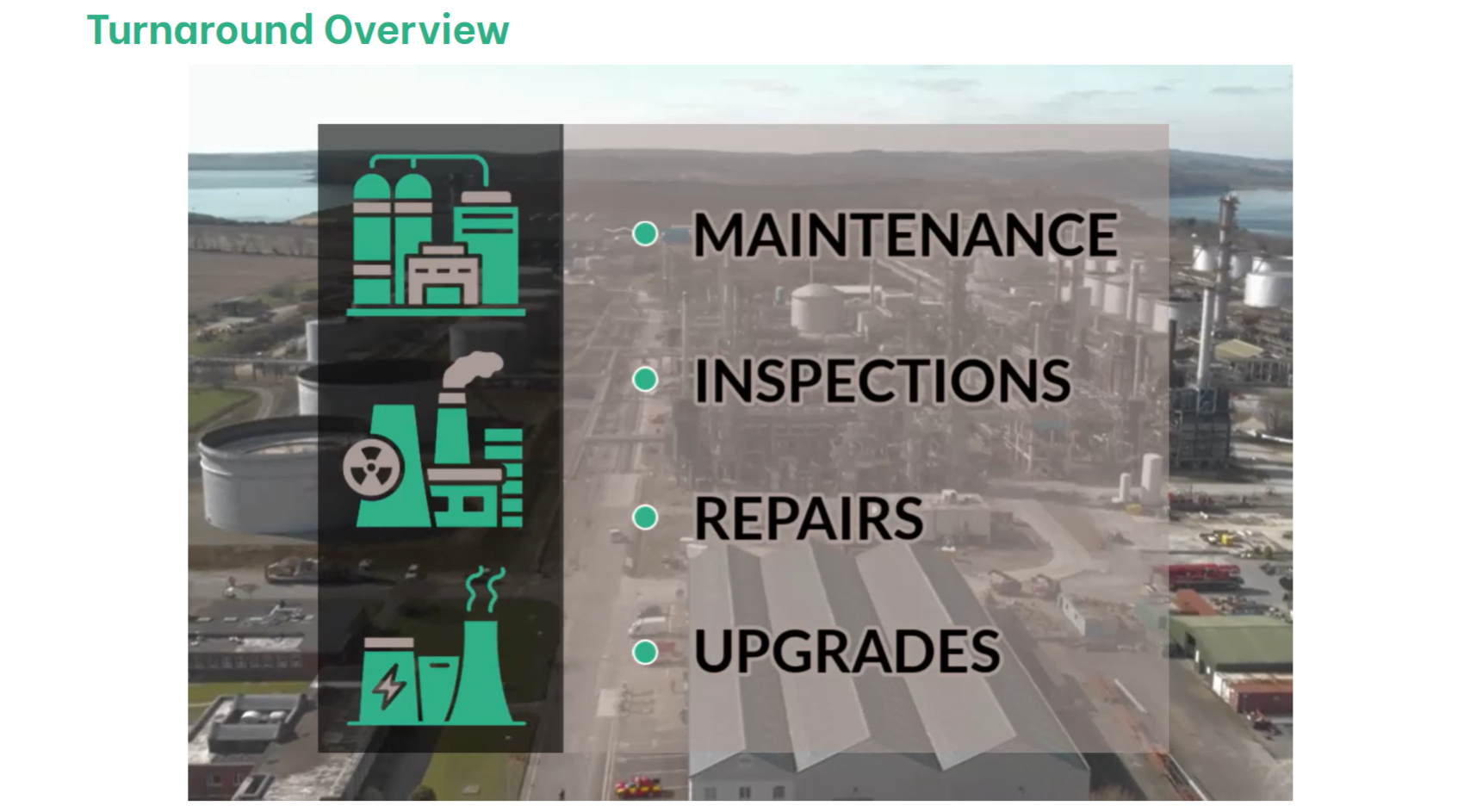
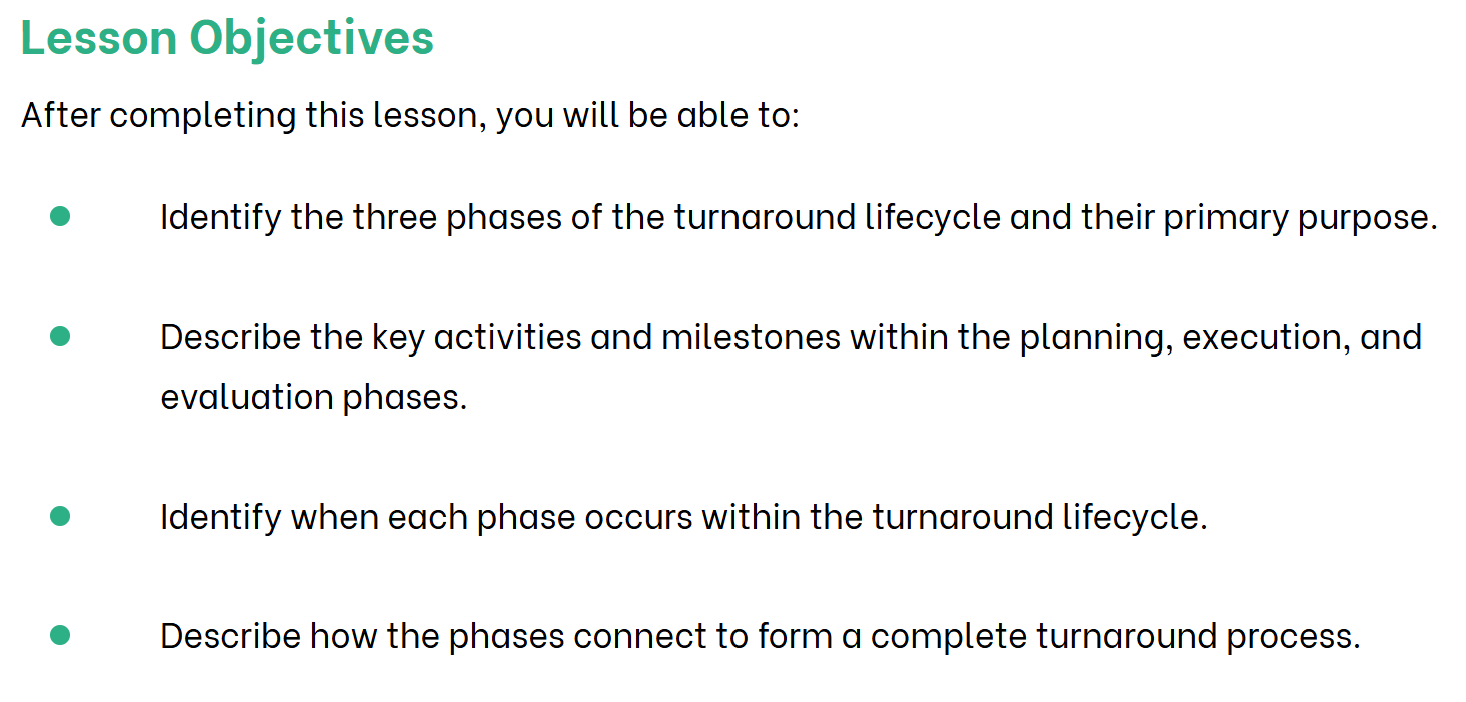
To engage the adult learner, the module begins with a video Introduction and clear learning objectives. According to Knowles’ Theory of Andragogy, adults are most motivated when they understand the immediate utility of the information. By defining the "why" (safety, regulatory compliance, and efficiency) and the "what" (specific phase identification), the training establishes professional buy-in from the first screen
Activating Background Knowledge
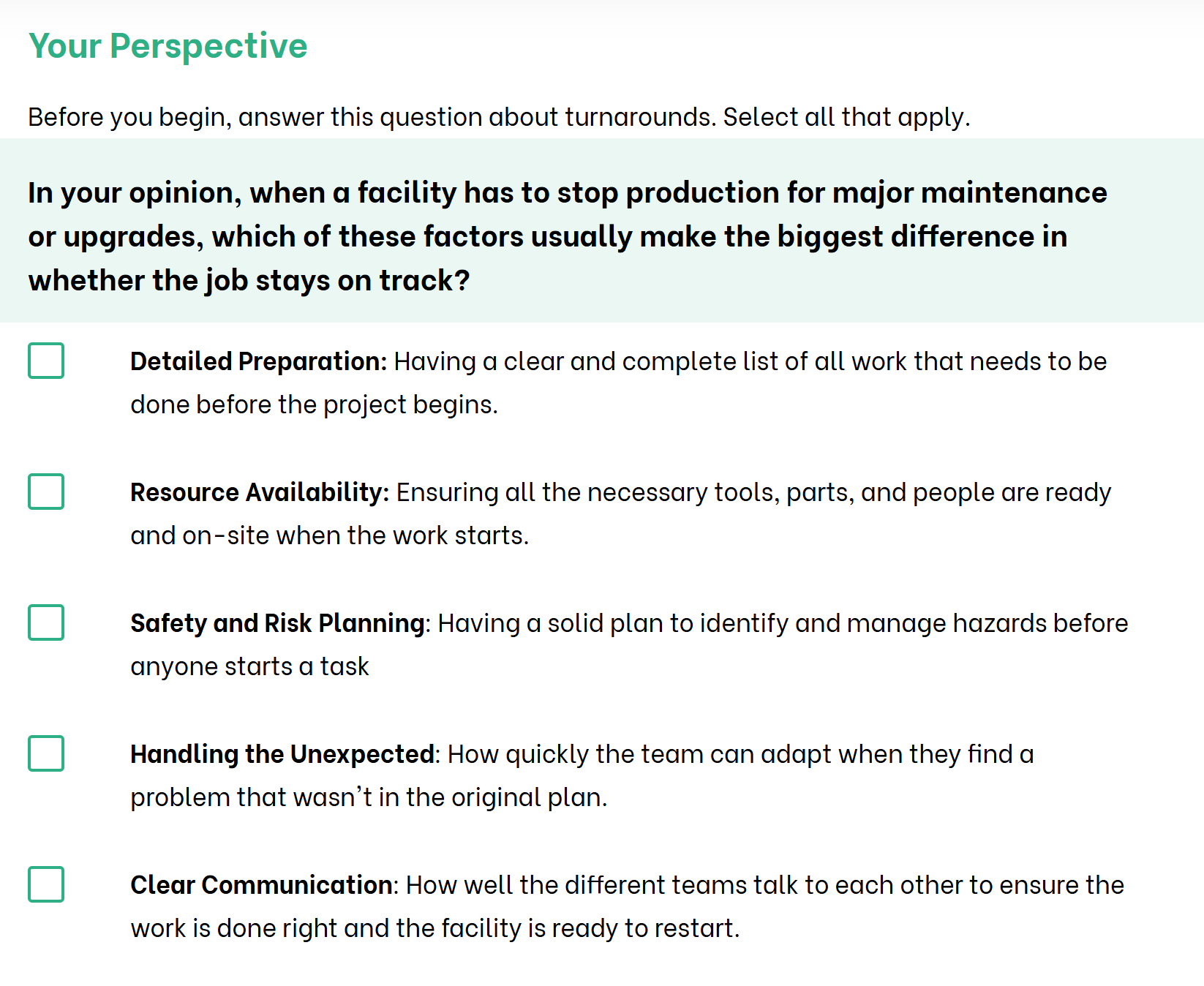
Before diving into the lifecycle phases, the module presents an activation question. In instructional design, this serves as schema activation. It forces the learner to explore through their prior professional experience to see what they already know about procurement, planning, and execution. This makes the subsequent new information easier to store in long-term memory because the brain has already "opened the folder" related to the topic.
Scaffolding and Feedback Loops
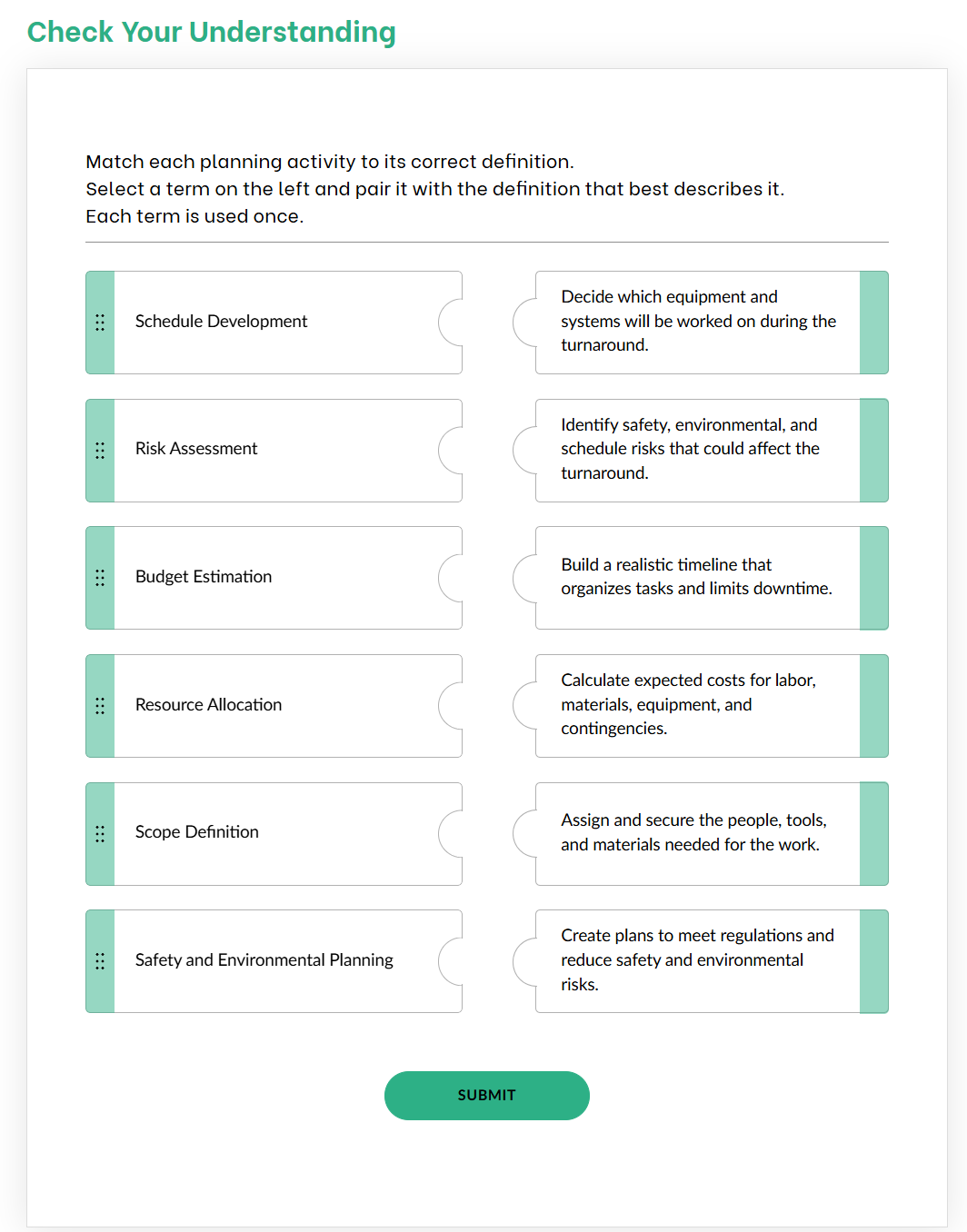
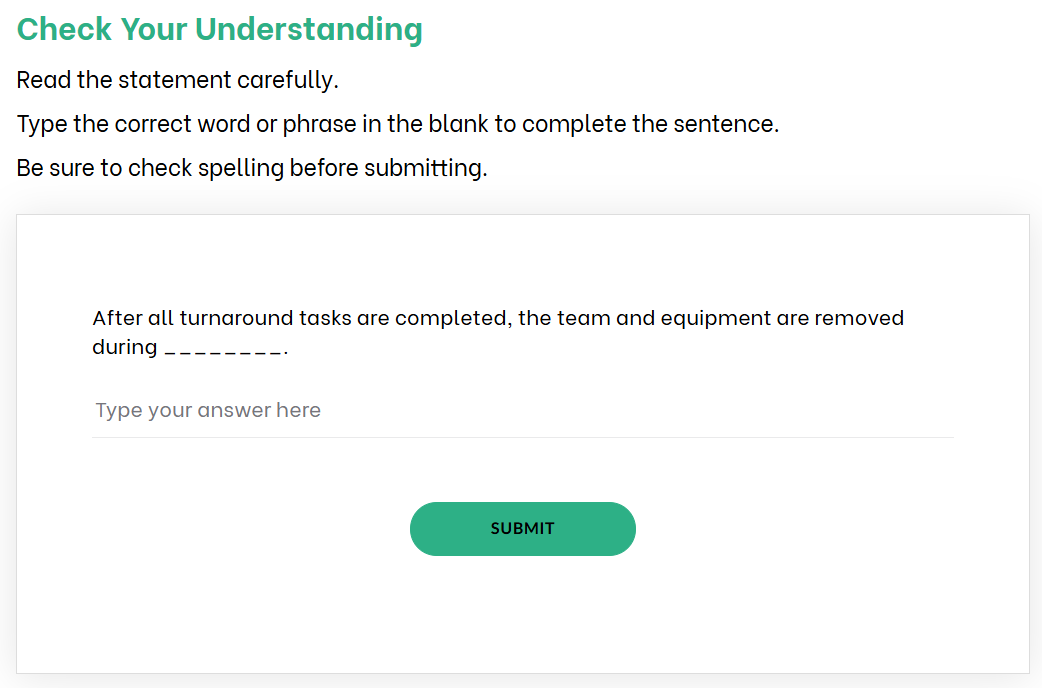
The core content relies on scaffolding to break the three phases of Planning, Execution, and Evaluation into digestible milestones. Active processing replaces the traditional continuous lecture. Each section is instead punctuated by knowledge checks like matching, gap fill, and multiple-choice questions.
These checks serve as essential mini-evaluations that provide immediate corrective feedback. This approach aligns directly with Gagné’s Nine Events of Instruction. Specifically, it focuses on providing feedback and assessing performance. This ensures the learner never carries a misconception into the next phase.
Contextual Application
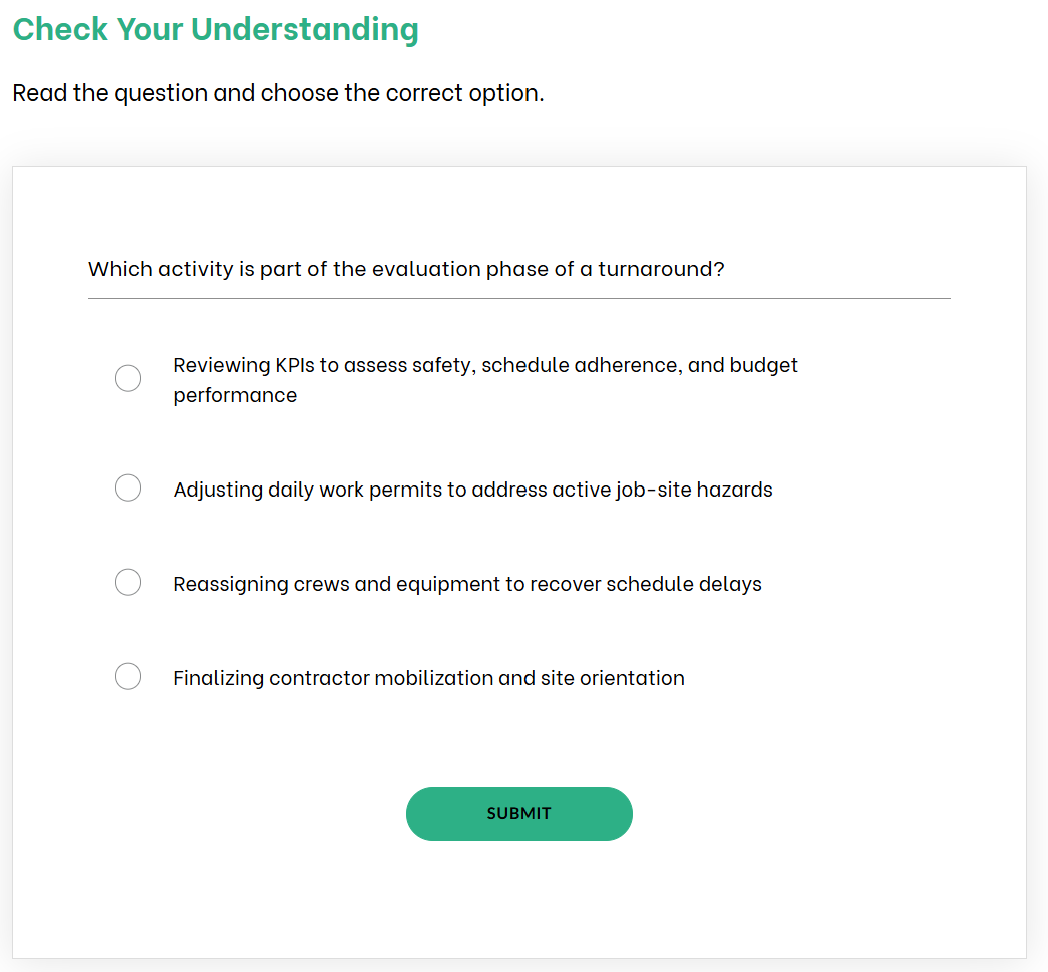
Learning works best when the environment matches the real world. This training asks learners to sort specific activities into their correct phases. For example, they might decide where adjusting work permits fits compared to reviewing KPIs.
This approach simulates actual decision-making on the job. It pushes the learner beyond just memorizing definitions. Instead, they must apply logic to professional scenarios they will actually encounter.
Closing the Loop
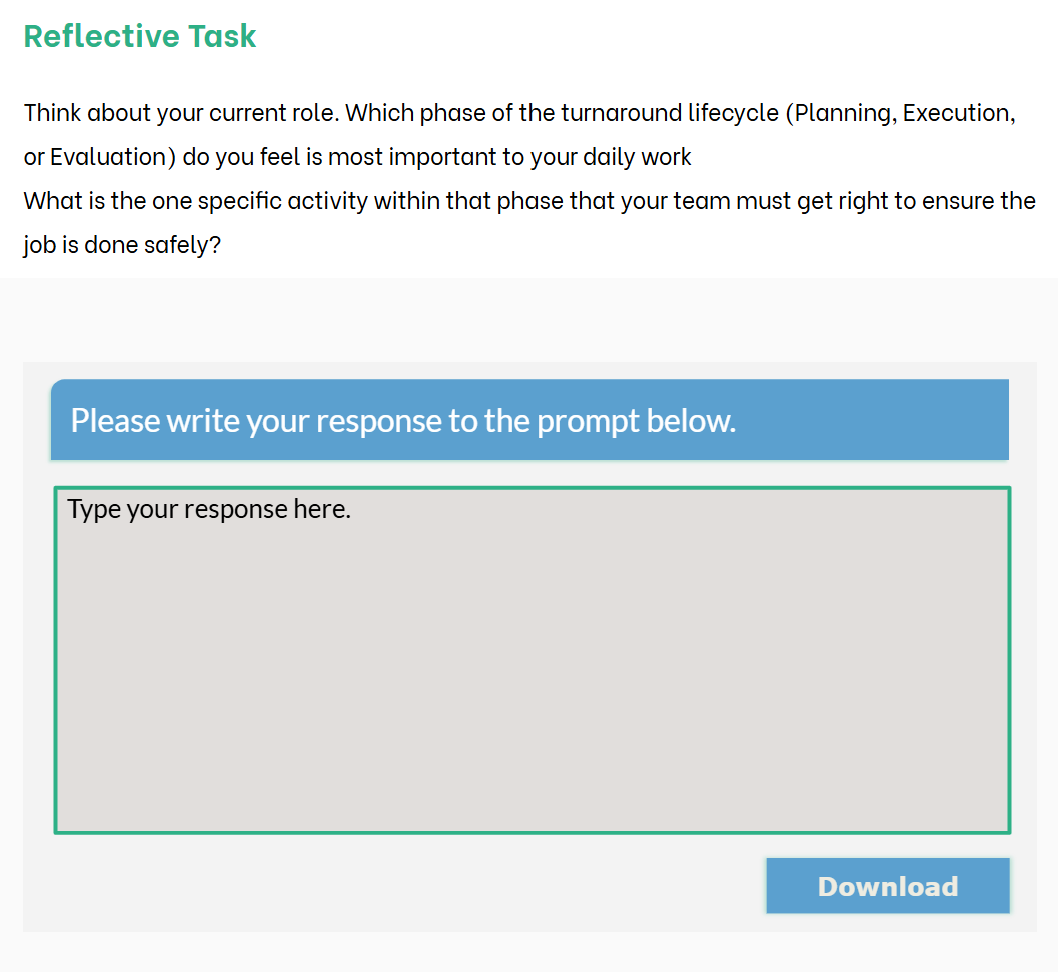
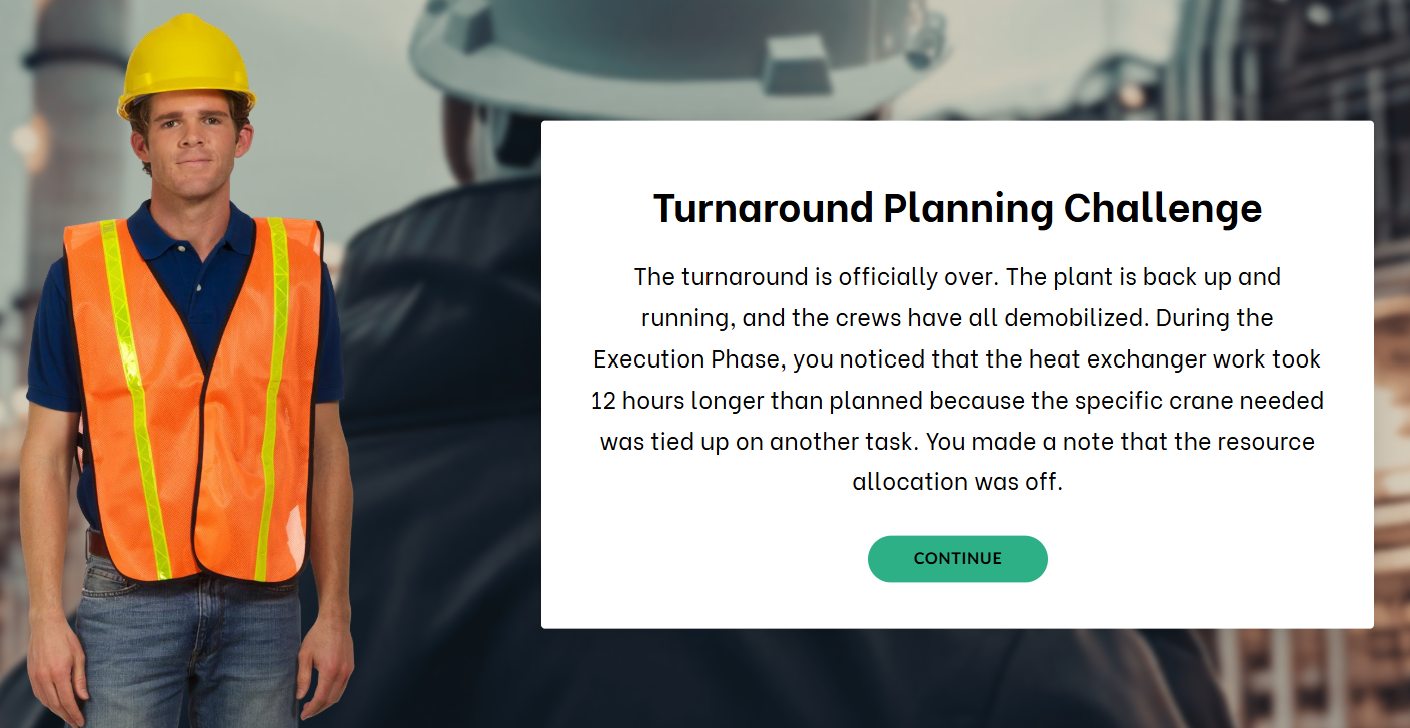
The module concludes with a reflective personalization task that intentionally ties back to the initial activation question. This encourages metacognition by asking the learner to think about their own thinking. The goal is to move the learner from general knowledge toward personalized insight.
By identifying which phase is most relevant to their specific role, the training becomes practical rather than theoretical. This will encourage the learner to do more than just remember a list of phases when they return to the facility. Instead, they will view their daily tasks through the strategic lens of the entire turnaround lifecycle.